
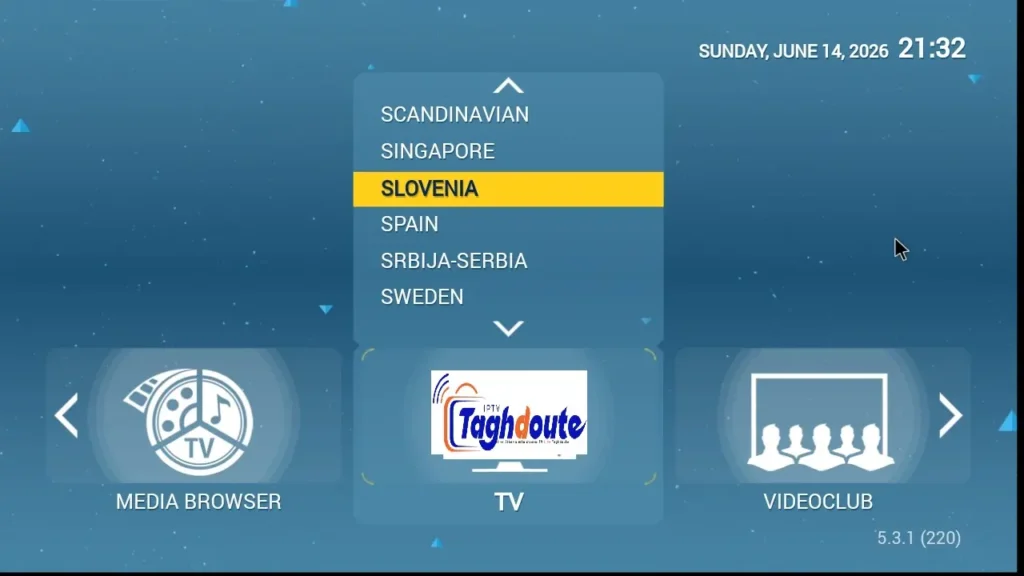
Internet Protocol Television (IPTV) has fundamentally transformed how people consume video content. Unlike traditional broadcast television that relies on satellite or cable infrastructure, IPTV delivers video, audio, and multimedia content through internet protocol networks. This comprehensive guide explores the technical foundations of IPTV, how it works, its applications, and why it has become a critical technology in modern media distribution.
Quick Answer: IPTV is a technology that uses internet protocols to deliver television and video content to viewers through broadband connections instead of traditional satellite or cable systems. It operates on managed networks or the public internet, enabling on-demand viewing, live streaming, and interactive television experiences.
What Is IPTV Technology and How Does It Work
The Fundamentals of IPTV
IPTV stands for Internet Protocol Television, a system that delivers television and multimedia content using internet protocols rather than traditional broadcast methods. The core concept is straightforward: video content is converted into data packets, transmitted across IP networks, and reassembled on the viewer’s device for playback.
Traditional television broadcasting uses electromagnetic waves transmitted through air (terrestrial), satellite signals from space, or cable infrastructure buried underground. IPTV, by contrast, treats video content like any other data transmitted across the internet, breaking it into small packets and reassembling them at the destination.
The key distinction of IPTV is that it leverages existing internet infrastructure, requiring only a broadband connection and compatible receiving equipment to deliver professional-quality video content directly to end users.
Basic Architecture of IPTV Systems
An IPTV system consists of several interconnected components working together in a coordinated manner.
- Content Acquisition and Management: Video content is obtained from various sources, including live broadcasts, pre-recorded programs, and licensed media. This content is then managed through centralized digital asset management systems that catalog, organize, and prepare content for distribution.
- Video Encoding and Compression: Raw video files are extremely large. To transmit efficiently across networks, video undergoes encoding and compression using standards like H.264, H.265 (HEVC), or VP9. This process reduces file size while maintaining acceptable quality for viewing.
- Content Delivery Network (CDN): The encoded content is stored across multiple servers distributed geographically. CDNs ensure content can be delivered from a location nearest to the viewer, reducing latency and improving streaming quality.
- IPTV Middleware: Middleware software manages user authentication, billing, program guides, and interactive features. It acts as the bridge between content delivery infrastructure and user-facing applications.
- User Device and Player: The receiving end consists of devices like smart TVs, set-top boxes, smartphones, tablets, or computers running IPTV client software capable of decoding and displaying video streams.
Types of IPTV Services and Delivery Methods
Live Television (IPTV Linear Broadcasting)
Live IPTV delivers broadcast television channels in real-time over IP networks. This operates similarly to traditional television, where viewers watch programs as they air. The technology requires robust network infrastructure to handle simultaneous streams to multiple users without buffering or quality degradation.
Video on Demand (VoD)
VoD services allow viewers to select and watch content at their convenience. Unlike linear broadcasting with fixed schedules, VoD provides unlimited flexibility. Users can pause, rewind, fast-forward, and resume viewing at any point. Services like Netflix and Amazon Prime Video primarily operate using VoD technology.
Time-Shifted Television (Catch-up TV)
This hybrid approach combines live broadcasting with storage capabilities. Programs are recorded as they air and made available for viewers to watch later, typically within a seven to thirty-day window. Catch-up TV addresses a major limitation of traditional television: fixed broadcast schedules that don’t accommodate modern viewing habits.
Interactive IPTV Services
Advanced IPTV systems enable interactive features including pause-live TV, picture-in-picture viewing, interactive program guides, and second-screen experiences where viewers can access additional content on mobile devices while watching television.
Technical Protocols and Standards Enabling IPTV
Streaming Protocols
IPTV relies on specific protocols designed to efficiently transmit video data across networks. The most widely adopted standards include:
| Protocol | Description | Primary Use Case | Advantages |
|---|---|---|---|
| RTMP (Real Time Messaging Protocol) | Adobe-developed protocol for low-latency streaming | Live streaming and content delivery | Low latency, widely supported in professional broadcasting |
| HLS (HTTP Live Streaming) | Apple protocol using HTTP for video delivery | Mobile streaming and adaptive bitrate | Compatible across devices, excellent for varying bandwidth |
| DASH (Dynamic Adaptive Streaming over HTTP) | Industry-standard adaptive streaming protocol | Professional and consumer streaming services | Universal standard, superior quality adaptation |
| MPEG-TS (Transport Stream) | Multiplexing standard for video and audio data | Traditional IPTV and broadcast systems | Reliable, established infrastructure support |
Video Codecs and Compression Standards
Video codecs determine how raw video data is compressed for transmission. Modern IPTV systems use:
- H.264 (AVC): The industry standard for video compression, offering excellent quality at reasonable file sizes. Nearly universal support across devices makes it the backbone of IPTV systems globally.
- H.265 (HEVC): Newer codec providing approximately 50 percent better compression than H.264, enabling higher quality at lower bitrates. Increasingly adopted for 4K and ultra-high-definition IPTV services.
- VP9 and AV1: Open-source codecs developed by Google and the Alliance for Open Media respectively, offering competitive compression with patent-free licensing, increasingly used in cloud-based IPTV platforms.
Network Infrastructure Requirements for IPTV
Bandwidth Considerations
IPTV quality depends significantly on available network bandwidth. Standard definition video typically requires 2.5 to 4 megabits per second, high definition requires 5 to 10 megabits per second, and 4K ultra-high-definition requires 15 to 25 megabits per second. Network providers must ensure sufficient capacity to support multiple simultaneous streams across their customer base.
Latency and Quality of Service (QoS)
Network latency, the delay in data transmission, directly impacts viewing experience. Live IPTV services require latency below two seconds for acceptable performance. Quality of Service mechanisms prioritize IPTV traffic across networks, ensuring video streams receive necessary bandwidth and processing priority over other data.
Modern IPTV systems implement QoS protocols that monitor network conditions in real-time and dynamically adjust video quality to prevent buffering and maintain consistent playback, a process known as adaptive bitrate streaming.
Network Security and Encryption
IPTV content often carries significant commercial value and requires protection against unauthorized access. Systems implement encryption standards including Advanced Encryption Standard (AES) and Digital Rights Management (DRM) technologies to protect content throughout transmission and storage.
Consumer IPTV Devices and Platforms
Set-Top Boxes and Dedicated Devices
Traditional IPTV delivery relied on dedicated set-top boxes connected to television sets. Modern equivalents include streaming devices like Roku, Apple TV, and Amazon Fire TV, which provide IPTV functionality without requiring specialized hardware.
Smart Television Integration
Modern smart TVs integrate IPTV applications directly into their operating systems. Built-in support for IPTV protocols eliminates the need for external devices, though processing power limitations in some television sets can affect performance with high-quality streams.
Mobile and Multi-Screen IPTV
IPTV technology extends beyond televisions to smartphones, tablets, and computers. Applications enable viewers to watch content anywhere on their home network or through internet connections, fundamentally changing television consumption patterns from fixed living room viewing to mobile viewing.
Video Quality Metrics in IPTV Systems
Resolution and Frame Rates
IPTV quality is measured by resolution (pixel dimensions) and frame rate (frames per second). Standard definition operates at 720 by 576 pixels at 25 frames per second in PAL regions or 720 by 480 at 30 frames per second in NTSC regions. High definition increases to 1280 by 720 pixels or 1920 by 1080 pixels at standard frame rates. Ultra-high-definition 4K content reaches 3840 by 2160 pixels.
Adaptive Bitrate Streaming
Modern IPTV systems continuously monitor available bandwidth and automatically adjust video quality. When bandwidth is limited, systems reduce resolution or frame rate. When capacity increases, quality automatically improves. This technology prevents buffering and maintains smooth playback across varying network conditions.
Adaptive bitrate streaming represents a fundamental advancement in IPTV technology, enabling seamless viewing experiences across devices with vastly different processing power and network connectivity.
IPTV in Professional and Enterprise Applications
Corporate Communications and Training
Enterprises use IPTV for internal communications, training delivery, and live event broadcasting. Corporate networks provide controlled environments where IPTV systems operate with guaranteed bandwidth and security, enabling reliable distribution of mission-critical content.
Hospitality and Venue Management
Hotels, cruise ships, and entertainment venues deploy IPTV systems to provide in-room entertainment and public area displays. These systems often integrate with guest management platforms, allowing personalized content delivery and billing integration.
Healthcare and Education
Educational institutions and healthcare facilities use IPTV for distance learning, medical training, and surveillance system monitoring. The technology’s flexibility supports specialized applications requiring synchronized delivery across multiple locations.
Challenges and Limitations in IPTV Technology
Network Dependency
Unlike traditional broadcast television that functions independently of internet status, IPTV fundamentally depends on network connectivity. Service interruptions directly result from network failures, making reliability dependent on internet infrastructure quality.
Bandwidth Constraints
In regions with limited broadband availability, IPTV services struggle. Users in areas served by slower connections cannot access higher quality streams, creating a digital divide where content quality depends on geographic location and internet service quality.
Licensing and Content Rights Complexity
IPTV services must navigate complex licensing agreements for content distribution. Territorial restrictions, exclusive rights, and licensing costs create operational complexity and regional service limitations.
Important Note: IPTV technology itself is completely legal. However, the application of IPTV for unauthorized content distribution is illegal. This guide focuses exclusively on technical understanding and legitimate applications.
Future Developments in IPTV Technology
4K and Higher Resolution Broadcasting
As network capacity increases, IPTV systems increasingly deliver ultra-high-definition content. 4K broadcasting requires advanced codecs and substantial bandwidth, pushing both technical capabilities and network infrastructure advancement.
Artificial Intelligence and Personalization
Future IPTV systems leverage machine learning algorithms to analyze viewing patterns and automatically recommend content. AI technologies optimize streaming quality in real-time by predicting network conditions and user preferences.
Cloud-Based IPTV Infrastructure
Rather than deploying physical infrastructure, cloud platforms provide IPTV services with scalable, distributed systems. Cloud-based IPTV offers reduced capital expenditure and improved flexibility for service providers.
Integration with 5G Networks
Fifth-generation mobile networks provide dramatically increased bandwidth and lower latency. These capabilities enable reliable IPTV delivery to mobile devices, expanding where and how people consume television content.
Comparing IPTV with Alternative Distribution Technologies
| Technology | Delivery Method | Primary Advantages | Primary Limitations |
|---|---|---|---|
| IPTV | Internet Protocol Networks | Flexible, interactive, on-demand, adaptive quality | Requires broadband, dependent on network |
| Satellite Television | Satellite Signal Reception | Covers remote areas, high channel count, fixed schedules reliable | Weather dependent, expensive equipment, inflexible |
| Cable Television | Coaxial Cable Infrastructure | Reliable, integrated services, established infrastructure | Limited interactivity, high infrastructure costs |
| Terrestrial Broadcasting | Broadcast Radio Waves | Free transmission, no subscription required, universal access | Limited content variety, fixed schedules, signal quality variable |
Building Knowledge in IPTV Technology
Educational Resources for Technical Understanding
Professionals interested in deepening IPTV knowledge can explore several resources. The International Telecommunication Union (ITU) publishes technical standards and recommendations. MPEG standards organizations document video compression technologies. University programs in media technology, telecommunications engineering, and broadcast engineering provide formal education in IPTV infrastructure and systems design.
Hands-On Learning Approaches
Practical IPTV learning involves setting up personal streaming systems using open-source software like VLC media player or Nginx streaming servers. Creating test networks and experimenting with different codecs, protocols, and delivery methods provides real experience with IPTV technology. Network simulation tools like Cisco Packet Tracer allow learning without expensive physical infrastructure.
Conclusion: Understanding IPTV Technology in Modern Media Landscape
IPTV represents a fundamental shift in how television content reaches audiences. By leveraging internet protocols and broadband networks, IPTV enables flexible, interactive, and personalized content delivery impossible with traditional broadcast technologies. Understanding IPTV technology requires knowledge of network infrastructure, video compression standards, streaming protocols, and content delivery systems.
The technology continues evolving with advances in network capabilities, video codecs, and intelligent content delivery. From residential entertainment to enterprise communications, IPTV applications span virtually every sector requiring professional video distribution. As broadband availability improves and 5G networks expand, IPTV technology will increasingly define how people consume video content globally.
Whether you’re an IT professional designing network infrastructure, a media company delivering content, or simply someone interested in understanding the technology behind modern streaming services, comprehending IPTV fundamentals provides essential knowledge for navigating contemporary media technology landscapes.
_________________________________________
Hello, We are pleased to offer you a one-year subscription for only €20.
If you’d like to experience our service before committing, you can request a free trial by contacting us directly on WhatsApp: [https://wa.me/212695572901]
We look forward to welcoming you!
Download the IPTV portal STBEMU 15_06_2026 file here
Download the IPTV Xtream 15_06_2026 file here
About The Author